Labour needs clean energy to do more than decarbonise the grid. At a time of stagnant growth and economic pessimism, the net zero mission is being framed as the government’s primary vehicle for getting the economy moving again,.establishing new skills and jobs in places long starved of investment.
The government’s clean energy jobs plan suggests the transition could support up to 860,000 jobs by 2030, including 400,000 additional roles. But is this happening quickly enough? Germany has twice as many renewable energy workers per capita as the UK. Denmark and Sweden also outstrip UK workforce capacity. Those gaps reflect years of investment in skills, supply chains and manufacturing. The economy is playing catch-up.
The clean energy workforce is expanding, albeit from a relatively weak base. The ONS estimates that there were 652,000 people employed in UK green jobs in 2024, an increase of more than a quarter on 2015 levels. Demand for such roles will only accelerate so long as the country remains committed to a net zero pathway, raising the risk that projects move faster than the workforce needed to deliver them.
That gap between ambition and capacity runs through the transition. Workers need to be trained in advance of projects, as well as after they begin. Skills are required where infrastructure is built, not concentrated elsewhere.

Labour’s former director of industrial strategy and clean energy, Virginia Sentance, now a partner at Flint Global, argues that the promise can obscure the reality. “There’s not this nebulous bucket of green jobs that all we have to do is grab,” she told the New Statesman’s recent Igniting Growth conference. “In most cases we’re talking about transitioning existing people’s jobs and lives to meet these changing needs.”
Sentance said this spoke to net zero’s effects no longer being distant or theoretical. “We’re at the point in the transition where people are feeling the impacts,” she acknowledged. “We had a period where you could build infrastructure in a slightly abstract way, away from people. Now we’re talking about how it actually changes their lives – how they heat their homes, the cars they drive, and often the jobs they perform.”
That creates both an economic and political challenge. Policies designed in Whitehall will only succeed if they translate into visible, local benefits – whether through new jobs, lower costs or improved services. People need to start seeing them soon, otherwise, the transition risks appearing imposed rather than participatory, particularly in communities already sceptical of economic change or perceived government overreach.
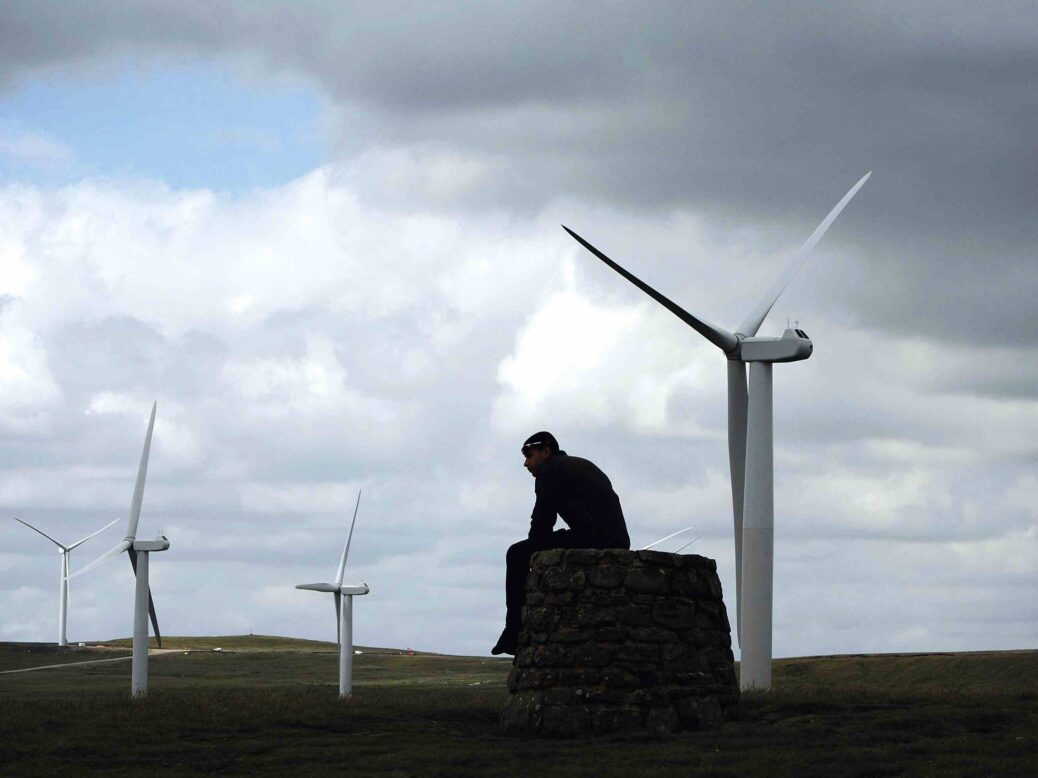
The transition will create new roles in offshore wind, nuclear, grid expansion and low-carbon heat. And much of this will depend on adapting familiar occupations to new technologies: engineers moving from oil and gas rigs to windfarms, construction workers delivering retrofit as well as housebuilding, electricians installing heat pumps rather than gas boilers.
The issue is not simply a shortage of workers but a shortage with the right training, in the right places, at the right time. With the clean energy workforce set to grow rapidly, demand will be concentrated in sectors that already face recruitment pressures.
For Luke Murphy, Labour MP and a member of the Treasury Select Committee, that means focusing not just on new entrants but on movement within the workforce. He called for “more proactive support for those retraining, particularly for workers moving from other industries to the clean economy”.
Failure risks shortages at the point of delivery, rising costs, missed targets and lost opportunities for people to directly engage with the biggest behavioural and industrial shift in living memory.
The regional dimension sharpens the challenge. Labour’s strategy places heavy emphasis on clusters, city regions, local supply chains and the industrial capacity needed to anchor them. Offshore wind in the north-east, carbon capture in industrial regions, nuclear in established sites, electrified heat and transport across towns and cities – clean energy is inherently local.
But place-based growth does not follow automatically from infrastructure investment. A wind farm off the coast or a new grid connection might bring little tangible benefit to nearby communities if the workforce is imported, supply chains are elsewhere, or training is too limited to connect local people to opportunity.
“Having an Office for Clean Energy Jobs is incredibly important,” Murphy said of meeting this challenge, “alongside investing in clusters across the country. The creation of clean energy technical excellence colleges is another important step.”
Given the scale of the job at hand, are we prioritising the right metrics for gauging success? Sam Alvis, associate director at IPPR, was sceptical of treating job creation as the primary test of whether net zero is on the right track. Clean energy can generate local growth, he agreed, but “maybe” that should not be the central focus. After all, politicians have “talked about job creation over and over again”, yet the public enthusiasm has been muted.
For Alvis, the problem was not just economic but perceptual. Voters tend to judge the transition not by long-term projections of employment but by its immediate effects on their lives. “People aren’t marking you on jobs,” he said. “They’re marking you on their bills.”
Even where investment does bring new roles to an area, those benefits are not always attributed to government policy – or even recognised as part of the clean energy transition at all.
That creates a disconnect between the narrative of a jobs-led transition and the lived experience of communities. Government can point to aggregate employment gains, but individuals are more likely to notice whether local industries are expanding, whether family members are in secure work and whether economic change feels stable or disruptive. The risk, Alvis suggested, is that a strategy built around future job creation fails to land politically because its benefits are too diffuse or delayed.
Murphy suggested this will ultimately be the test of the government’s approach. While it has got some of the key pieces in place, he said, the outcome will depend on whether those plans translate into real improvements in people’s lives. “A large part of this is ensuring jobs in the clean economy are high-quality and high-standard so people want to train or retrain into them.”
That is the constraint on Labour’s argument. Clean energy may offer a route to long-term growth, but its success will only ever be judged in the present.
Content from our partners



Related